Garage Door Off Track Repair in Bullhead City, AZ
The door is supported, worked back into its rail and re-hung on straight track with sound rollers, and whatever knocked it out is fixed so it doesn't happen again.
A garage door in the Bullhead City area is off track if rollers have slipped out of the rail, the door sits at a slant or is jammed, or a panel buckled where it caught. Switch the opener off and leave the door alone.
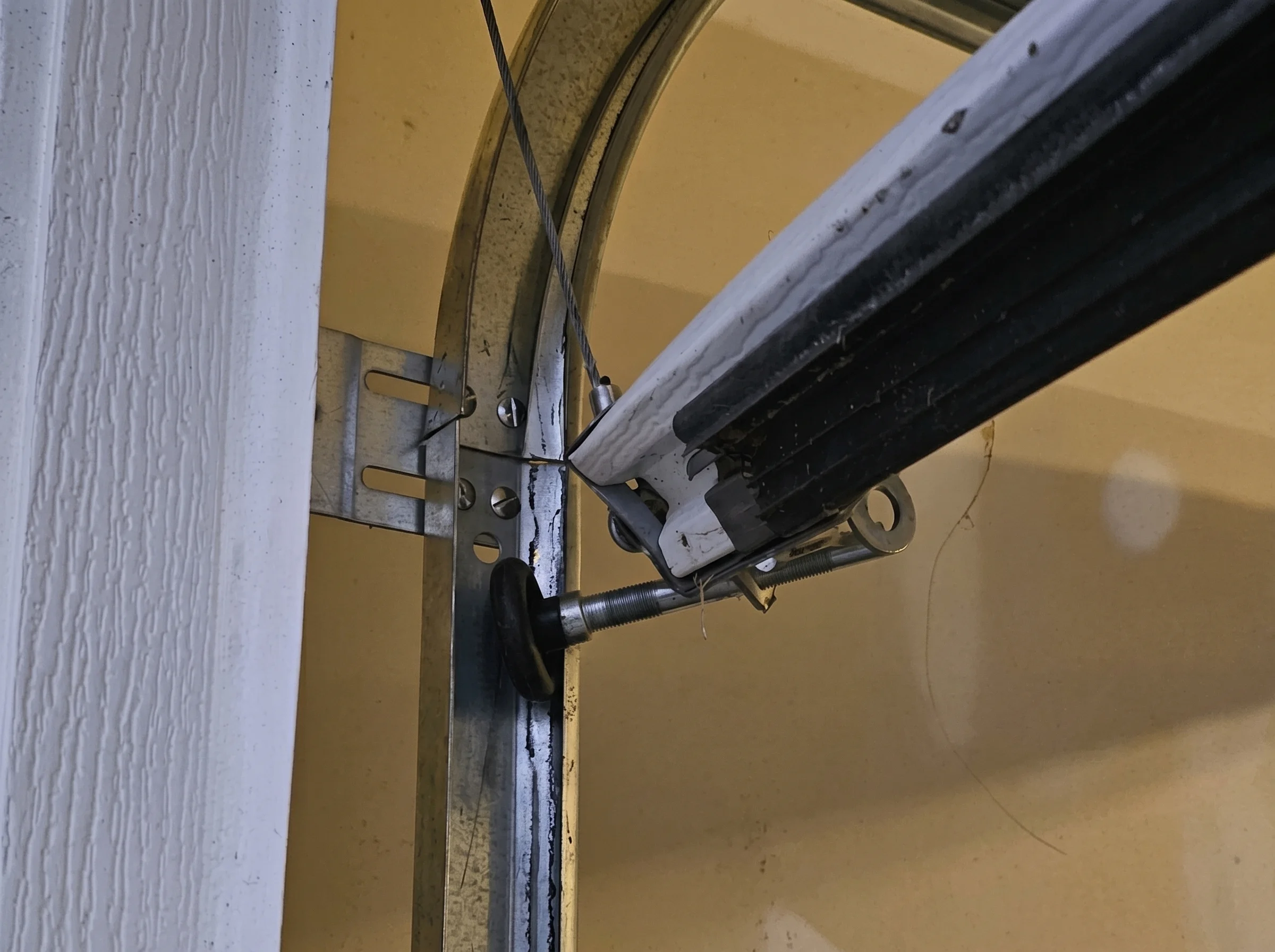
How an off-track door looks
Rollers hanging outside the rail, most often down low on the door or around the curve where the rail bends up under the ceiling.
Tilted or lodged in place, frequently halfway open.
A buckled panel, where the opener kept pushing a door that was jammed.
Rail that is bent, dented or pulling away from the wall.
Scraping, popping or grinding noises right before it jumped the rail.
Is it off track? Don't run the opener, and let us know which side came out and how it happened.
Contact UsWhat pushes a door off track
A bumper strike
Backing a vehicle into a closed or half-raised door is the classic cause, and the lowest bit of rail typically bends too.
Cable broke or jumped
One side falls, the door racks sideways and rollers escape. Slack cable? The cable repair page deals with that part.
Rollers worn or broken
Once a roller's bearing fails it scrapes rather than spins, and the next bump in the rail pops it out.
Track gone loose or bent
Vibration slowly works the wall brackets loose, so the rails spread a little more each year until a roller escapes the rail entirely.
An obstruction in the way
A garbage can, bicycle or mower left under a lowering door, worst when the opener's force is cranked up.
Do this first
Keep the opener off
It keeps pushing, which can crease panels or tear the track from the wall.
Never pull the red release handle with the door partly raised and out of its rail; the whole thing may drop or swing free.
Don't force rollers back in under load. Spring tension remains and the door can jump, a real hazard when a third of residents here are 65 or older.
Keep away from the door, and if a vehicle is shut inside, say so when you reach out.
How the fix goes
Step one is bracing the door so nothing drops or slides during the work, with spring tension handled as needed.
Damage gets assessed
Counting affected rollers, the length of track involved, any panel damage, and what started it.
Track is trued or replaced
Light bends get straightened; creased or torn rail is replaced.
Damaged or worn rollers come out and hinges get a check, since one cracked hinge will pop another roller loose.
The door is seated back in the rails and the wall brackets snugged up; then the opener runs it through full cycles and its force and travel limits are rechecked.
Describe what the door is doing
A line or two will do to start. Naming the failed part isn't necessary, so don't worry.
Rollers
Rollers govern how smooth and quiet a door is and fail long before it does, faster when about 135 days a year hit 100°F.
Basic steel rollers without bearings are the simplest design: loud, and rough on the rail along with their own wheels.
Nylon wheels on sealed bearings are far quieter and rarely call for any oil or attention.
A wobble, flat spot, cracked wheel or binding bearing says the roller is finished.
A loud but unbroken door often needs little more than new rollers, which usually fits inside a maintenance visit without a bigger job.
What affects off-track repair cost
How far it came out
One or two rollers at a corner, or the door dangling.
Track condition
Straightened rail or replaced sections, one side or both.
Rollers and hinges in need of replacing.
Bent or cracked panels
A badly bowed panel may need replacing, and matching an old door's panel isn't always possible.
A cable or spring that failed and set it off.
A panel that can't be saved
A hard hit can leave panels too bent to straighten. One panel can often be replaced and the rest kept, if still sold. For larger jobs, check the contractor with the Arizona Registrar of Contractors.
When a match isn't available, or many panels are hurt, garage door installation outlines what a new door involves.
Frequently asked
Can I coax the rollers back into the rail by hand?
Possibly, if only one roller has slipped out low on a shut door and the track isn't bent or a cable loose. Past that, don't: the door is heavy, spring-loaded and can move suddenly and without warning when you least expect it.
Why does it keep leaving on the same side?
Typically a rail slightly out of alignment, a loose wall bracket, or a cable on that side needing adjustment. Put the door back without fixing that and it will come out again.
Should the tracks be oiled?
No. Keep rails clean and dry, as oil attracts grit. Lubricant belongs on roller bearings, hinges and springs only, never the rail.
More garage door services
Garage Door Cable Repair
Cables that fray, break or slip off the drum, and a door hanging lopsided.
Read more →Garage Door Spring Repair
Springs that have broken, torsion or extension, replaced with a set suited to the door's weight.
Read more →Garage Door Installation
Replacement doors in steel, wood, composite or glass, built to suit the size of your opening.
Read more →Reach out
Is the door stuck shut, open or halfway? Which side jumped the rail, did something hit it, and does a cable look slack?
A photo of each side taken from a few feet back is the most useful thing you can send, along with roughly how old the door is.