When a garage door cable came off its drum, the door may hang crooked, stop moving, or become unsafe. The cable works with the spring system to lift and lower the door. Keep people and vehicles away, do not use the opener, and have a technician check the door before it moves again.
A cable problem can feel urgent, especially if a vehicle is trapped or the door will not close. Leave the door where it is and keep others away. This guide explains what may have happened, what you can safely look for, and when a technician should take over. Bullhead City Garage Door Repair helps property owners understand cable and spring concerns and choose a safe next step.
Table of Contents
- What happens when a garage door cable comes off the drum?
- Why does a garage door cable come off the drum?
- What causes a garage door cable to snap?
- Is it safe to use a garage door with a cable off the drum?
- What should you do when a garage door cable comes off?
- How do technicians repair a cable that has come off the drum?
- How can you help prevent garage door cables from coming off?
- Key takeaways
- Conclusion
- Frequently Asked Questions
What happens when a garage door cable comes off the drum?
When a lift cable slips off its drum, one side of the door may lose support. The door can lean, catch in its tracks, or stop partway. You may see a loose cable hanging beside the door. The spring system may still hold force, so do not touch the cable or nearby parts.
How do the lift cable and drum work together?
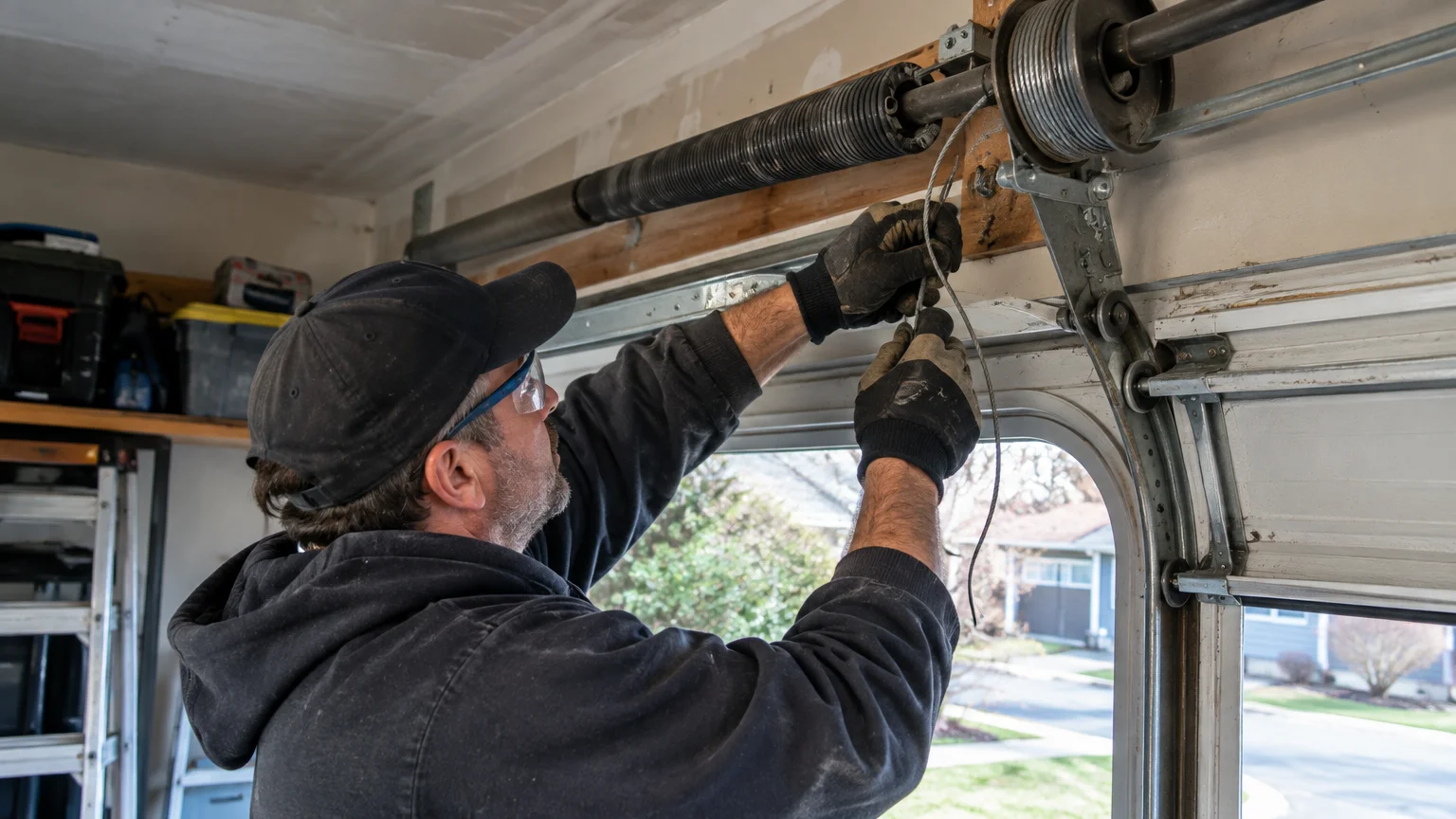
A lift cable is a strong metal wire that helps move the door. Each cable connects near the bottom of the door and winds around a grooved drum near the top. The drums turn as the door moves. The spring system helps support the door’s weight.
When both sides work well, the door moves evenly. If one cable slips, breaks, or loses tension, the sides may no longer move together. The door can look crooked even when the track seems straight. A crooked door is a warning, not a problem to fix by hand.
Why may the door hang crooked or stop moving?
The side with a loose cable may sag. The door may also jam against a track, so the opener cannot move it. Stop using the door if it looks crooked. Do not pull it level or try to push it along the track.
A cable off the drum may point to a problem with a spring, drum, track, roller, or door balance. The visible cable may be only one part of the issue. Bullhead City Garage Door Repair can check the full lifting system, rather than treating the loose cable as the only fault. This helps property owners in Bullhead City understand what needs attention.
Why does a garage door cable come off the drum?
A cable can come off when the door does not rise evenly or another part stops guiding it well. A worn roller, an object in the door’s path, uneven spring force, or a damaged track may affect how the door moves. The cable alone may not show the exact cause.
How can spring tension, worn parts, or an obstruction cause trouble?
The springs help balance the door’s weight. Spring tension is the stored force that helps the door move. If a spring weakens or breaks, one side may lift differently. A worn drum or damaged cable may also keep the cable from winding in its normal path.
An object in the door’s path can stop it from closing evenly. Dirt or damage near a roller may also affect smooth movement. From a safe spot, you can look for an obvious object in the way. Do not move a stuck door to test it, and do not reach near the rollers or cables.
Can a loose or damaged track play a part?
Yes. A bent track, loose support, or roller that has left its track can shift the door as it moves. That shift may pull a cable away from its drum. Tracks guide the rollers; they are not meant to support a door that hangs out of line.
You can look for visible damage from a safe distance, without touching the door or its parts. Stop using the opener if a track looks bent or a roller is out of place. Garage Door Off Track Repair may be needed along with cable work. Repairing only the cable may leave the cause in place.
What causes a garage door cable to snap?
A cable may snap after wear, rust, fraying, or damage from uneven door movement. Cables carry weight each time the door opens and closes. If a cable looks worn, ask a technician to check it before it breaks and leaves one side unsupported.
How do corrosion, fraying, and wear affect a cable?
The small metal strands in a cable can weaken over time. Moisture and rubbing can add to the wear. Fraying means some of the small wires have broken or started to separate. Rust, bends, and flat spots may also show damage.
These signs mean it is time to arrange a check, not to handle the cable. Even a cable that seems loose may still be under force. Do not pull it, cut it, or try to wind it back onto the drum. A technician can check whether the cable is safe and whether other parts are damaged.
Can a broken spring overload the cables?
A broken spring can change how the door’s weight is held. The cable and drum system may then face uneven strain, especially if someone keeps trying to run the door. A broken spring can be hard to spot, so a technician checks the springs and cables together.
Torsion and extension springs are different types of springs, but both can hold dangerous force. Spring and cable repairs are not safe DIY work. Heavy parts can move suddenly and cause serious harm or damage. A trained technician has the tools and skills to check the system safely. If a spring is damaged, Garage Door Spring Repair may be needed too.
Is it safe to use a garage door with a cable off the drum?
No. Do not use a door with a cable off the drum until a technician has checked and repaired it. The door may drop, lean farther, or jam without warning. Keep children, pets, visitors, and vehicles away from the door and its path.
What risks does a damaged cable create?
A garage door is heavy, and a damaged lifting system may not hold it evenly. The door can shift in its tracks or drop while someone is nearby. It may also harm a vehicle, stored items, the opener, or other door parts if it moves in an unsafe way.
A crooked door may leave a gap that affects home security. If the garage is open, do not stand below the door or put an object under it. Keep the area clear and arrange help from a garage door repair professional. Good garage door safety starts with staying away from a door that may move.
Why should the opener not run, and why should the door not be forced?
Using the opener can add strain to a cable, spring, track, or motor that is already under stress. Forcing the door by hand may make it shift or fall. Do not press the opener button to see if the door still works, even if it seems almost closed.
Do not loosen brackets, remove cables, or try to adjust a spring. Bottom brackets and lift cables can hold strong force. If the door blocks a vehicle, do not try to free it yourself. Tell the technician what is trapped and ask what to do before anyone tries to move the door.
What should you do when a garage door cable comes off?
Stop using the door, keep people clear, and contact a qualified technician. You can safely note what the door looks like from a distance. Do not touch the cable, drum, spring, or bottom bracket. These steps help lower risk while you arrange an inspection.
What can a homeowner safely check while waiting?
The safest checks are visual only. Do not stand under the door, step over a cable, or reach into the track. Leave the opener switch alone and make sure others do not use the door. If the opening is exposed, keep the area clear. Do not place anything under the door.
You can note whether the door is open, closed, or partway open. You can also describe any loud sound, uneven movement, or visible damage. Do not clean the cable, move a roller, or pull the door straight. Bullhead City Garage Door Repair can use these details to understand the problem before arriving.
What should you tell the technician?
Tell the technician what changed and when you first noticed it. Say whether the door was moving, whether the opener was used afterward, and whether a vehicle is trapped. From a safe place, point out visible cable damage or a crooked door. Do not touch any part to show it more closely.
Mention if the door also seems stuck in its track. Garage Door Cable Repair may include fixing the cable and checking why it slipped. Clear details can help the technician plan an inspection. They do not replace a full check of the door and its lifting system.
How do technicians repair a cable that has come off the drum?
A technician first checks why the cable came off and whether other parts are damaged. The work may include checking cables, drums, springs, tracks, rollers, and door balance. The right repair depends on the cause. Simply putting the cable back may not solve the problem.
What parts are checked during an inspection?
The technician looks for fraying, rust, bends, or other cable damage. They check whether the drum is worn or out of line and whether the springs support the door evenly. Tracks, rollers, brackets, and the door itself may also need attention.
Door balance means how evenly the spring system helps hold the door as it moves. If the door is out of balance, a cable that is reset or replaced may slip again. A full check can find the cause and show whether other repairs are needed before the door is used. The best garage door is still unsafe if its lifting parts do not work well.
How is the cable reset or replaced safely?
A technician uses the right tools and training to manage force in the lifting system. The repair may involve resetting or replacing a cable, fixing a drum or track problem, or dealing with a spring issue. These are not tasks for a homeowner to copy.
After the repair, the technician checks how the door moves and looks over related parts. The goal is for the door to move smoothly and stay supported. If the opener or track was affected, Garage Door Opener Repair or Garage Door Off Track Repair may also be needed.
How can you help prevent garage door cables from coming off?
You can help by noticing changes early and keeping the door’s path clear. Regular professional checks can find worn cables, damaged rollers, or uneven movement before the door stops working. A visual check is useful, but it cannot prove that a cable or spring is safe to handle.
What warning signs should homeowners watch for?
Pay attention to changes in how the door moves or sounds. Stop using it if it starts to lean, jerk, scrape, or leave a cable hanging loose. A spring that looks damaged or a roller that has moved out of place also needs a professional check.
Other warning signs include rust, fraying, or a door that no longer rests evenly. These signs do not always show the cause. Do not wait for a cable to snap before arranging help. Do not try to adjust a spring or repair a cable yourself.
Why do routine inspections matter?
A trained technician can check parts that are hard to assess from the floor. They can look at cable condition, spring response, drum alignment, and how the door travels. Garage Door Maintenance can help find wear before it leads to a sudden loss of access.
You can keep the door’s path clear and watch for new sounds or uneven movement. Leave parts under tension to a professional. For residents around Bullhead City, from Davis Dam and Downtown Bullhead City to Laughlin, Fort Mohave, Willow Valley, Mohave Valley, and nearby areas, an inspection can help address concerns before the door becomes stuck or unsafe. A garage door seal can help close the gap at the bottom, but it cannot fix a cable or spring problem.
Key takeaways
- A cable off its drum can leave the door crooked, stuck, or unsafe.
- Keep people and vehicles away, and do not run the opener.
- Look only from a safe distance; never pull or reset a cable.
- A technician should check the cable, springs, drums, tracks, and rollers.
Conclusion
A cable that comes off its drum can leave a garage door crooked, stuck, or unsafe. The cause may be a worn cable, broken spring, damaged track, or another part of the lifting system. Do not use the opener, force the door, or try to reset the cable yourself. Keep people clear and tell a technician what happened.
When a cable slips or snaps, prompt help can protect people and property and help restore safe door movement. Contact us today to arrange garage door cable repair with Bullhead City Garage Door Repair.
Frequently Asked Questions
Can a garage door cable come off because of a broken spring?
Yes. A broken spring can make the door lift unevenly and put extra strain on its cables. A cable may then slip from its drum or become damaged. Springs and cables can hold dangerous force, so leave the door unused until a technician checks the full lifting system.
Can someone put a garage door cable back on the drum?
A homeowner should not try to put a cable back on the drum. The cable may be under tension, and the door may shift or fall during handling. A technician can manage the force, check for damage, and find out why the cable came off.
Should the garage door opener be used if a cable is loose?
No. Using the opener can strain the door, cable, spring, or motor and make the problem worse. Keep the opener off and do not force the door by hand. Keep people and vehicles away until a technician has checked and repaired the lifting system.
Is a crooked garage door a sign of a cable problem?
It can be. A loose, broken, or off-track cable may leave one side of the door lower than the other. A damaged roller, track, or spring can also cause uneven movement. Since these problems can overlap, have a technician check the door before anyone tries to move it.
What should someone tell a garage door technician?
Describe the door’s position and when the issue began. Mention any sudden sound, uneven movement, visible cable damage, or vehicle trapped inside. Do not touch or adjust parts to get a closer look. These details help the technician prepare for a safe inspection.
The contact page is labeled Get in touch, and Bullhead City Garage Door Repair is the business serving the area.
If you are not sure what you are dealing with, it is worth having someone look at it before it turns into a bigger job. Get in touch with Bullhead City Garage Door Repair today and we will tell you where you stand.