To learn how to change the garage door opener code, start with the opener’s manual and follow its exact steps. Keypad PINs and remote codes may be managed separately, so decide which access you need to update. Keep the door area clear, test the controls from a safe place, and stop if anything acts strangely.
A keypad or remote makes it easy to enter a garage, but old codes may no longer be private. Check the opener instructions before changing settings, and update only the access that needs attention. Homeowners in Bullhead City can use these tips as a guide, but their own opener manual gives the exact buttons and timing.
Table of Contents
- When should you change your garage door opener code?
- What should you check before changing the code?
- How do you change the code on a garage door keypad?
- How do you change the code on a garage door opener?
- What should you do if the new code does not work?
- How can you keep children and pets safe around the keypad?
- How can you maintain secure, reliable garage door access?
When should you change your garage door opener code?
Change a keypad PIN or opener code when someone who knew it should no longer have access. This may happen after moving, a change in who lives at home, or a lost remote. A new PIN may also be wise if many people know it or it is easy to guess.
Situations that call for a code change
A garage door keypad PIN is the number someone enters to open the door. Treat it like a house key: share it only with people who need access, and update it when those needs change. If a remote goes missing, changing the keypad PIN may not block that remote. You may also need to remove the lost remote from the opener’s stored settings.
A code change can help after a service visit if someone was given a temporary PIN. It can also help when a former tenant or worker should no longer enter the property. For a business, the person in charge should review who still needs access and follow the company’s safety rules. Bullhead City Garage Door Repair helps Bullhead City property owners understand keypad and opener problems when controls do not work as expected.
How rolling codes differ from fixed codes
A rolling code is a signal that changes each time a remote is used. This makes it harder for someone to copy the signal and use it later. A fixed code stays the same until a person changes it. The opener’s age and model help determine which kind it uses, so check the manual.
A new keypad PIN may not remove paired remotes. Clearing remote codes may not change the keypad PIN either. These can be separate settings. Before you start, decide whether you need to change the PIN, remove old remotes, or do both. The right access method must be updated for the change to help.
What should you check before changing the code?
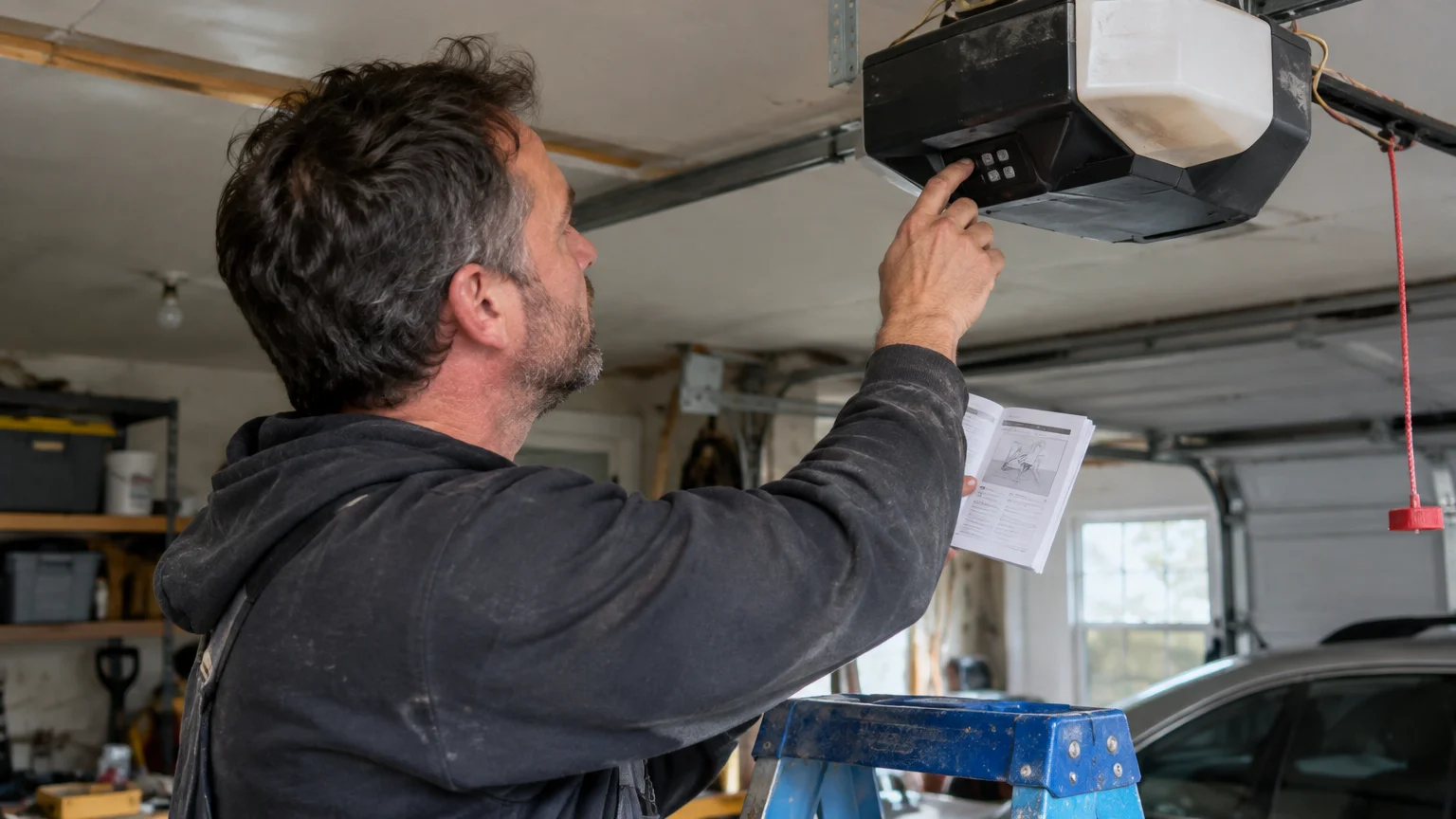
Find the opener model and read its manual before changing a code. Brands use different buttons and steps, so one method may not work for every unit. Use the learn button only as the manual says, and clear the door area before testing.
Identify the opener and learn button
The opener is the motor unit above the garage door. Its label often shows the brand and model. The learn button pairs remotes or keypads with the opener. Its color and location can vary by model. Do not guess which button to press, since the wrong steps may erase remotes or change settings you meant to keep.
If the label is hard to read, search the maker’s site for the model and manual. The manual should explain how to enter programming mode and whether you can remove one remote or all paired devices. Keep the instructions nearby while you work. Do not touch wires or remove covers unless the manual clearly says it is safe.
Gather the manual and decide which devices to keep
Make a list of the remotes and keypads that should keep working. Include household remotes, a wireless keypad, and any vehicle controls paired with the opener. Some homes may also have a wall control or smart-home device. The manual can tell you whether these share settings or need separate setup.
Keep the door closed, and move people and pets away from its path. Keep the hand control close, but do not stand beneath the door while testing. If a remote is missing, plan to remove its access; a new keypad PIN may not disable it. If the opener is stuck or the door will not move, Garage Door Opener Repair may be needed before you continue.
How do you change the code on a garage door keypad?
Follow the exact steps in the opener manual to change a keypad code. Many systems use the learn button to connect the keypad, then ask you to enter a new PIN. Button order and timing depend on the model, so use the manual instead of a general method.
Step 1: Enter programming mode with the learn button
Check that the door is closed and the area around it is clear. Find the learn button with the help of the manual, then follow that model’s steps. Some openers stay ready for programming only briefly. If that time passes, stop and begin again as directed. Do not press buttons at random.
Keep your hands away from moving parts, and do not stand under the door. The opener could start moving during setup or testing. If the door moves when you do not expect it, stop using the keypad and follow the manual’s safety advice. You do not need a technician just to follow clear, safe instructions. But stop if the door or controls act in an unusual way.
Step 2: Set and test a new keypad PIN
Enter the new PIN as the manual directs, then finish pairing the keypad. Choose a number that household members can remember but visitors cannot easily guess. Avoid dates, house numbers, or simple repeated patterns. Do not write the PIN somewhere people outside can see it.
Test the keypad from a safe place where you can see the door. Make sure the doorway is clear before pressing its button, then check that the door opens and closes as expected. If the keypad does not work, do not keep trying random numbers. Check the manual, battery, and timing first. Also make sure the safety sensors are clear and in place.
How do you change the code on a garage door opener?
For remote access, check whether your opener can clear all paired remotes or remove one device at a time. Some models erase stored remote codes through a certain process, while others use different controls. Follow the manual for your model so you do not remove remotes you still need.
Step 1: Clear old remote codes when the model allows it
If a remote is lost or you need a full reset, the manual may explain how to clear stored remote codes. This could disconnect every remote, not just the missing one. Check what the process removes before starting, and have working remotes ready to pair again if needed.
Do not open the motor housing or work on wires to change a code. Stop if the instructions are unclear, the learn button is damaged, or the opener moves without a command. A trained technician can check the controls and help with safe programming. Repeated code attempts will not fix electrical faults or problems with how the door moves.
Step 2: Reprogram the remotes and controls still in use
Pair each approved remote by following the manual, one at a time. Test each remote from a place where you can see the door. Keep people away from the doorway during every test. If a vehicle’s built-in control uses the opener, check the vehicle manual too.
A wall control may use a different system from a wireless remote, so clearing remote codes may not affect it. Smart-home controls may need their own setup as well. Once the planned devices work, store the manual somewhere easy to find and keep the PIN private. Bullhead City Garage Door Repair can explain Garage Door Opener Repair options if the opener will not pair or respond.
What should you do if the new code does not work?
If the new code fails, check simple causes first. The keypad battery may be weak, the button order may be wrong, or the programming window may have passed. Then check whether the keypad and opener work together. Do not force the door or repeat steps that the manual does not support.
Check batteries, button timing, and programming steps
A weak keypad battery may still let the keypad light up, but it may not send a clear signal. Replace the battery only as the keypad manual allows, then try the listed pairing steps again. Check that you entered the PIN correctly and followed the timing in the opener manual.
Some keypads must be paired again after the opener’s stored codes are cleared. If the opener light does not act as the manual says, stop and review the model instructions. Do not guess at button combinations. More attempts may erase other pairings or make it hard to know which devices still have access.
Resolve signal or compatibility problems safely
If the keypad works only when you stand close, check for a weak battery, damage, or something blocking the opener antenna. The manual may list which keypad models work with your opener. Older equipment may not support a newer keypad or remote, even if the controls look alike.
Do not pull on the door or force it open to test a faulty system. A door that is heavy, crooked, stuck, or off its track may have a mechanical problem. Garage Door Off Track Repair is not the same as keypad programming and should be done by a trained technician. If the opener hums, reverses, or cannot move the door, a professional can check the cause and help lower the risk of injury.
How can you keep children and pets safe around the keypad?
Keep the PIN private, place the keypad where young children cannot reach it, and teach children not to play with the controls. Keep people and pets away from a moving door. A keypad controls access, but it does not replace the door’s safety features or adult care.
Store the PIN securely and prevent unintended operation
Share the PIN only with people who need regular access. If a child or visitor learns it, change the PIN and tell approved users the new one in private. Do not write it on the keypad cover, a nearby wall, or anything visible through a window. For a rental home or business, follow the owner’s rules and update access when approved users change.
Explain that the keypad is not a toy and that no one should open the door when someone is in its path. Keep remotes out of reach of young children. If children can reach the keypad, consider whether you can move it to a safer place without making it hard for adults to use.
Keep children clear of moving parts and safety sensors
Garage door safety sensors are devices near the floor that help the opener notice objects in the door’s path. Keep their lenses clear, and do not cover, move, or bypass them. Children and pets should stay away while the door opens or closes, even if the sensors seem to work.
Adults can check that nothing blocks the sensors and that the door acts as the manual says. Never use a child, pet, or body part to test them. If the door does not stop or reverse as expected, stop using it and arrange a repair. A keypad or remote is not a safety device.
How can you maintain secure, reliable garage door access?
Review who has access, keep the opener manual, and check safety features as the manual says. Homeowners can do simple checks and cleaning, but should leave springs, lift cables, and other parts under tension to trained workers. A safe door should respond to its controls without strange movement or noise.
Review access and test the door
Check which family members, workers, or tenants still need a remote or PIN. Remove access that is no longer needed, and store spare remotes safely. During regular checks, look for keypad damage, loose parts, blocked sensors, or a door that moves unevenly. If the manual allows it, you can wipe sensor lenses with a soft cloth.
Garage door maintenance can include simple cleaning and visual checks. It does not mean adjusting springs, cables, or bottom brackets. These parts can hold strong force and cause serious harm if handled the wrong way. If the door is unbalanced, makes a new grinding sound, or has a damaged cable, leave it alone and contact a trained technician. The garage door spring is under strong tension, so it is not a safe do-it-yourself repair.
Frequently Asked Questions
Does changing the keypad PIN erase remote controls?
Not always. The keypad PIN and remote controls may have separate settings, based on the opener model. Read the manual before changing either one. If a remote is lost, check whether you can remove just that device or must clear and pair all remotes again.
How often should a garage door code be changed?
There is no set schedule for every home. Change the PIN when someone who knew it should no longer have access, or when it may have been shared too widely. Keep it private, and use the opener manual to learn how keypad and remote access work.
Can a homeowner change a garage door keypad code safely?
Usually, yes, if the opener and keypad work as they should and the manual gives clear steps. Keep the door area clear, follow the instructions, and test from a safe place. Stop and call a technician if the door moves by itself or the controls do not respond.
Why does the keypad light up but not open the door?
The light may work even if the battery is weak or the keypad has lost its pairing. Check the battery and manual, then confirm the PIN and button timing. If the opener still does not respond, the keypad may not work with it, or the opener may need repair.
Should a lost remote be removed from the opener?
Yes, if someone could use it to enter the garage. Check the manual for how to remove paired remotes. Some models erase every remote at once, so you may need to pair approved remotes again afterward.
Key takeaways
- Follow the opener manual because steps vary by model.
- Keypad PINs and remote codes may need separate updates.
- Test the door with its path clear and people at a safe distance.
- Handle simple checks yourself, but leave springs and lift cables to trained workers.
Secure garage access depends on private codes, working controls, and a door that moves safely. If programming fails, a remote is missing, or the door seems damaged, stop using unsafe controls and get help. For urgent opener or door concerns, Contact us at Bullhead City Garage Door Repair.
If you are unsure what is wrong, getting the controls checked can help you avoid unsafe use. Bullhead City Garage Door Repair serves local property owners, and Bullhead City Garage Door Repair can help explain the next step.
If you are not sure what you are dealing with, it is worth having someone look at it before it turns into a bigger job. Get in touch with Bullhead City Garage Door Repair today and we will tell you where you stand.