Garage Door Maintenance in Bullhead City, AZ
A tune-up goes over each moving or load-bearing part, corrects whatever has drifted out of adjustment, oils the right points and points out wear before it turns into a breakdown.
On a Bullhead City door that opens and closes daily, this is the least costly moment to deal with a tired spring or fraying cable, since you pick the day rather than finding out when the door refuses to move.
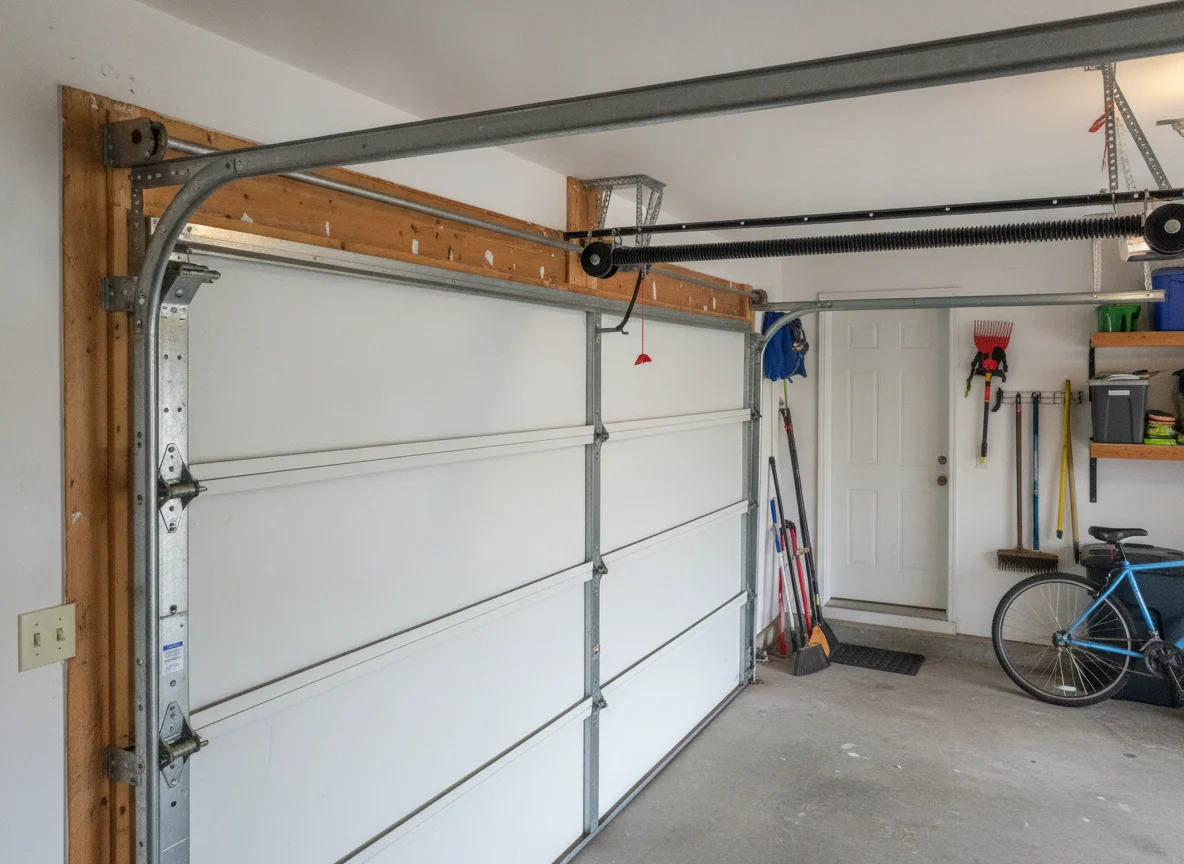
Items on the checklist
Springs
Looked over for gaps, stretch, rust and uneven wear, with the door balance-tested.
Cables
Looked at for fraying and rust, mainly at the lower brackets, and for equal tension left and right.
Hinges and rollers
Worn, loose or cracked rollers flagged; hinges and bearings oiled.
Track
Inspected for bends and loose brackets, cleaned, then checked for true alignment.
Fasteners
Bolts on hinges, brackets and track get snug again; thousands of cycles shake them loose.
The opener
Drive tension, travel distance and closing firmness get set right.
Auto-reverse test
It must go back up if the sensor beam is interrupted, and also if it meets an obstruction while closing.
Bottom seal and weatherstripping, inspected for gaps where dust, heat and rodents get in.
You should leave knowing what is worn and why, so you can decide whether to act now or just keep watching it.
Is the door louder, jerkier or slower than before? Describe the change and we will go from there.
Contact UsTime for a check?
The door is louder than before, whether grinding, squealing or slamming at the end of its run.
It jerks along or slows partway through.
It shuts hard, or one side meets the floor before the other.
The opener seems to strain more than it once did.
Nobody can recall the last inspection, and the door runs every day.
Describe what the door is doing
A line or two is enough to begin with, and you needn't know which part has failed or what it's called.
Checks you can do yourself
These take a few minutes and catch trouble early:
Inspect the springs and cables monthly from the floor with the door shut, watching for coil gaps and frayed strands. Keep your hands well clear of both.
Check auto-reverse
Set a roll of paper towels or a length of 2x4 flat on the floor in the door's path and close it. It should bounce back up on contact. If not, stop using the opener until it has been adjusted.
Check the sensors
Wave a broom handle through the beam as the door comes down. The door should stop and rise.
Oil the correct points
Hinges, roller bearings and springs, using a garage-door spray. In a place with about 5.40 inches of rain a year, grit is the enemy, so skip grease and keep the tracks dry.
Keep the tracks and the floor beneath the door clear of sand, leaves and stored boxes. A door that closes onto grit or a stray box makes the opener fight the whole system and can wear the bottom seal.
Frequency
How hard the door works decides it. A main entrance used many times a day deserves more attention than a spare door used now and then. Here, where roughly 135 days a year reach 100°F, a check before summer begins is sensible, so wear gets spotted before the hottest stretch.
A yearly check suits most households, shifted up or down by how much the door is used.
What affects maintenance cost
A single or double door, and whether there's an opener to service too.
Worn parts found during the visit: rollers, a bottom seal, hinges or a cable near the end. Ask for them quoted apart from the tune-up, and check bigger work with the Arizona Registrar of Contractors.
How far out of true the door has wandered
A door left alone for years takes longer to set right than one that is checked often.
When to skip the tune-up visit
Servicing is meant for a door that still runs. Once something has broken, the repair pages fit better:
Frequently asked
Is servicing worthwhile for a recent door?
If it's busy, yes. Springs and rollers wear by cycle count, not age, so a heavily used door can burn through them sooner than its years suggest.
Can a check prevent a spring failure?
No spring lasts forever. A check finds one close to the end, so it's replaced at a time you choose rather than on the morning it snaps without any warning at all.
Which lubricant is right?
A spray made for garage doors, silicone- or lithium-based. Skip household oil and skip heavy grease too.
More garage door services
Garage Door Spring Repair
Torsion or extension springs that have failed, replaced by a set sized to your door's weight.
Read more →Garage Door Cable Repair
Lift cables that fray, snap or slip, and a door that hangs at a slant.
Read more →Garage Door Opener Repair
Openers that buzz, reverse or ignore the remote, plus new units when mending isn't worth it.
Read more →Reach out
Mention how old the door and opener are, roughly how many times a day it cycles, and any recent change such as a new noise, a jerk or a sluggish close.
Just bought the house? Say so, since an inherited door has no service history.