A garage door sensor yellow light often means the sending sensor has power, but it does not prove the door is safe to close. The other sensor must read the beam, and the opener must respond the right way. Check for dust or objects first. In Bullhead City, stop using the door if it moves in an unsafe way.
A door that will not close can leave a home or business open. Small sensor lights can be hard to understand, especially when they blink or change color. A few safe checks may help explain the problem. They can also help you know when to call a trained technician. Dust, weather, or a sensor bumped by stored items can affect how it works in Bullhead City.
Table of Contents
- What does a yellow garage door sensor light mean?
- Why is my garage door sensor light blinking?
- How do garage door safety sensors work?
- What should I check when the sensor light is yellow or blinking?
- How do I clean garage door safety sensors?
- How do I realign garage door sensors?
- Why won’t my garage door close even when the sensors look aligned?
- Can I bypass garage door safety sensors?
- How can I test whether the sensors are working correctly?
- When should I call a garage door repair technician?
- Frequently Asked Questions
What does a yellow garage door sensor light mean?
A yellow light often appears on the sending sensor. This part sends an unseen beam across the doorway. On many systems, a steady yellow light means the sensor has power. It does not show that both sensors work; the receiving sensor must read the beam, too.
Why sensor light colors vary by manufacturer
Garage door opener makers do not all use the same light colors. One brand may use yellow on the sending side and green on the receiving side. Another may use other colors, or only show a light when the beam is clear. The meaning depends on the opener and sensor model. The opener manual is the best guide to its lights.
A blinking light may point to a weak signal, a blocked beam, loose wire, or a sensor that moved. It does not always mean a sensor is broken. If one light is steady and the other is dark or blinking, the receiving side may not read the beam. Check for dirt or an object before you think a part has failed.
How to identify the sending and receiving sensors
The sending sensor makes the beam. The receiving sensor reads it. Both sit near the bottom of the door tracks and face each other across the opening. The manual, sensor label, or wire connection may show which one is which. Since they can look alike, do not guess from their shape.
If you cannot find the manual, the label on the opener may help you find its model. Bullhead City Garage Door Repair can help Bullhead City homeowners and property owners understand odd sensor lights. A steady yellow light can be normal on some systems. A blinking light or dark receiving side may need a closer look. First check for nearby objects and dirt before moving a sensor.
Why is my garage door sensor light blinking?
A blinking sensor light may mean the beam is blocked or the sensors do not line up. It can also point to loose wiring, a weak power supply, or a sensor that has moved. The blink pattern can differ by model. Check the manual before treating a certain number of blinks as a fault code.
What intermittent blinking can indicate
If a light blinks only when the door moves, a sensor may shift as the door or track moves. A loose bracket or vibration may affect the beam. A leaf, tool, storage bin, or cobweb may also cross the beam from time to time. Check the area without touching the door’s moving parts.
Dust or moisture can affect sensor parts, too. If the door starts to close and then goes back up, the opener may not be reading the beam. Do not keep pressing the remote to force the door shut. Repeated attempts can hide the cause and leave the door in an unsafe position.
How to distinguish a sensor issue from a power problem
First, see whether the opener lights and wall control work. If the opener has no power, a sensor light may be dark for that reason. If the opener works but one sensor light is out, the problem may be in that sensor, its wire, or its connection. A tripped breaker or unplugged opener may also stop the system.
Check only plugs and switches that are easy to reach. Do not open the opener housing or touch exposed wires. If lights flicker on the opener and both sensors, there may be a larger power or wire problem. Garage Door Opener Repair can help when basic checks do not explain the opener’s actions. Stop if a wire looks cut, pinched, or worn.
How do garage door safety sensors work?
Garage door safety sensors send an unseen beam across the doorway. The receiving sensor checks for that beam while the door closes. If something blocks it, the opener should stop the door and send it back up. This safety feature helps keep the door from closing on a person, pet, or object.
How the infrared beam detects an obstruction
Infrared light is a kind of light people cannot see. One sensor sends it, and the other sensor receives it. When the path is clear and both sensors face each other, the receiver can read the signal. A box, person, pet, or layer of dirt can block the beam. The opener may then treat the doorway as blocked.
The sensors are usually low on each side of the opening. This helps them detect things near the floor. It also means stored items, cleaning tools, or a vehicle tire can bump them. Keep the area in front of each sensor clear. Do not hang items where they could cross the beam.
Why the door reverses when the beam is interrupted
The opener is made to stop or reverse if it cannot confirm that the beam is clear. That response is a safety action, not a sign that the door is being difficult. A door that reverses when something blocks the beam may be working as it should. Never try to defeat this safety feature just to close the door.
The sensors are only one part of a garage door system. The opener, tracks, rollers, springs, and cables also affect safe movement. A door that moves unevenly or makes a harsh sound may have another problem. Do not pull, lift, or force a heavy door that seems stuck. Garage Door Maintenance can help keep the system working well, but a damaged door needs repair before use. A working garage door seal also helps close the gap at the floor, but it does not fix a sensor problem.
What should I check when the sensor light is yellow or blinking?
Start with simple checks around the sensors. Look for objects in the beam, dust on the lenses, or a sensor that seems to have moved. Do not touch springs, cables, or brackets at the door’s lower corners. If a wire looks damaged or the door moves in an unsafe way, stop and call a technician.
Check for objects, dirt, and cobwebs near the beam
Look across the doorway at sensor height. Move only loose items that are safely out of the door’s path. Check for leaves, bins, tools, toys, or cobwebs near either sensor. A small object can block the beam even when the floor looks clear from inside the garage.
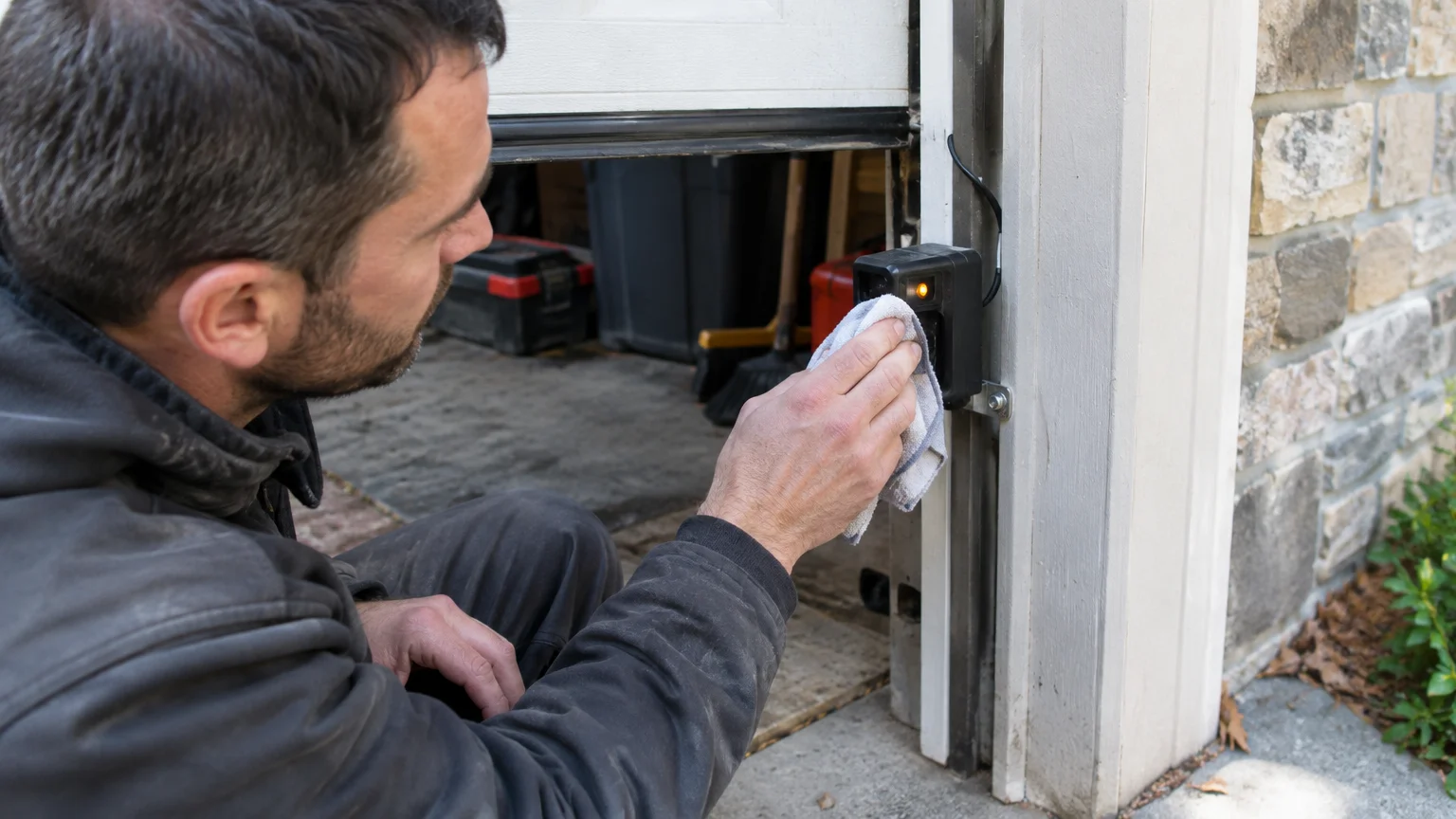
Dust and smudges can cover a lens. Wipe it gently with a soft, dry cloth. Do not use a sharp tool or spray cleaner onto the sensor. If gentle wiping does not remove the dirt, do not take the sensor apart. Force can damage the lens or its case.
Inspect sensor brackets, wiring, and connections
Look at the sensor brackets from a safe place. A sensor that hangs at an angle may not face the other side. Check whether visible wire looks pinched, loose, or cut. Do not pull it or try to reconnect bare wires. Wire work can cause a shock or damage the opener.
Also check the floor and tracks for objects that could stop the door. A garage door that comes off its tracks or moves unevenly needs more than lens cleaning. Garage Door Off Track Repair is a separate repair, and the door should not be used until checked. If it is heavy, tilted, or partly open, keep people away. Do not try to guide it by hand.
How do I clean garage door safety sensors?
A homeowner can safely clean exposed sensor lenses when the door is still and the area is clear. Use a soft, dry cloth and light pressure. Do not spray liquid into the sensor, pull wires, or remove the case. If cleaning does not help, the cause may be alignment, wiring, or the opener itself.
Safe steps for cleaning the sensor lenses
First, make sure no one is using the door. Keep children and pets away from the opening. Use a clean, soft cloth to wipe each lens. Then look for dust or cobwebs around the sensor without pushing or twisting its bracket. This is simple care, not a repair to the door’s moving parts.
After cleaning, see whether the lights look steady. A steady light can mean different things on different opener models, so check the manual. If the door still will not close, do not keep rubbing the lens or pressing the remote. Dirt may not be the problem. A sensor that stays dark may have a power, wiring, or part fault.
How to avoid damaging the lens or wiring
Avoid paper towels that leave bits behind, rough cloth, strong cleaners, and sharp objects. Do not soak the sensor or spray water at it. Keep your hands away from tracks and moving parts. If the wire runs through a tight spot or looks worn, leave it alone. Do not tape or join damaged wires yourself.
You do not need a professional for gentle lens cleaning or moving a loose item away from the beam. A professional is needed for damaged wiring, a broken bracket, or a door that still acts badly. In Bullhead City, a technician can check the sensor and opener as one system, rather than guessing about one part. Stop right away if the door moves without a clear command.
How do I realign garage door sensors?
Sensors need to face each other so the receiving sensor can read the beam. A homeowner can check whether they look level and clear, but should not force a bent bracket or work near a moving door. If a light will not settle after a simple visual check, a technician can find out whether alignment, wiring, or a broken part is the cause.
How to adjust the sensors so they face each other
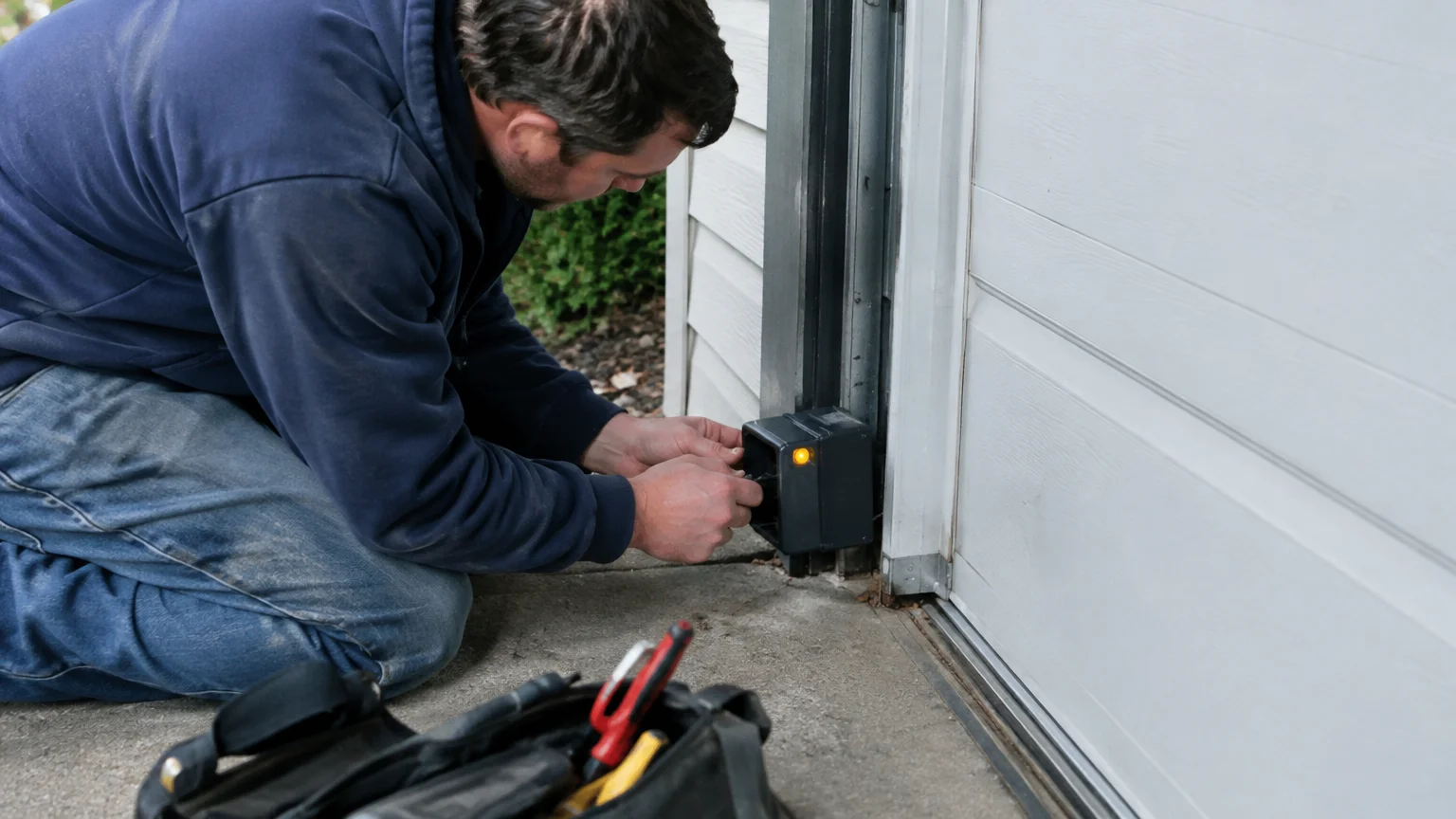
Look from one sensor toward the other. They should point across the doorway, not toward the floor or wall. Check whether a bracket looks bent or loose, but do not pull hard on it. Keep the door still during a visual check. Keep your fingers away from tracks and hinges.
If a sensor has only been nudged, a small, gentle change may help it face the other side. Do not loosen parts you cannot identify or use force. Stop if the bracket will not move easily or if a wire is stretched. A bent mount may need repair, not more adjustment. The opener’s instructions can explain its light patterns.
How to tell when the indicator lights show alignment
Many systems show a steady light when the receiver sees the beam. The color and pattern depend on the model. Read the opener manual to confirm what the lights mean. If the receiver light stays off or keeps blinking, the beam may be blocked or a part may have failed.
A door that closes once does not prove the sensors are reliable. The light should stay steady, and the door should move normally without stopping or reversing. Do not test alignment with a person or pet in the doorway. If the door closes only when a sensor is held or pushed, stop using it and get help. A possible injury is not worth the risk.
Why won’t my garage door close even when the sensors look aligned?
A door may not close even when the sensors seem to face each other. The cause could be an obstruction, a track problem, damaged wiring, or an opener setting. A door that starts down and reverses may also react to another safety or movement issue. Do not assume the sensors are broken just because the door will not close.
Other causes, including track obstructions and opener settings
Look for an object in the door’s path and along the tracks. A bent track, damaged roller, or crooked door can stop safe movement. Do not try to straighten a track or lift a heavy door. A door off its tracks needs a trained repair, not more force from the opener.
The opener may need help if it stops or reverses while the beam is clear. Settings affect how far the door moves, but changing them without knowing the model can cause new problems. A remote or wall control issue can also make the door seem unresponsive. Garage Door Opener Repair can address trouble that remains after basic checks.
When a closing problem may signal wiring or opener trouble
If sensor lights flicker, wires look damaged, or the opener makes a strange sound, stop testing. A loose connection can come and go, so the door may work at times. The problem may be inside the opener or in a wire path that is unsafe to reach. Leave the opener cover and wiring alone.
A garage door that will not open may also have a broken spring, cable, or opener problem. Do not try to lift it if it feels unusually heavy. Springs and lift cables hold strong force, and a failure can cause serious harm. Garage Door Cable Repair is work for a trained technician. Do not try to fix a panel or door part while the door is under tension.
Can I bypass garage door safety sensors?
No. Bypassing garage door safety sensors removes an important safeguard. The door may then close when a person, pet, or object is underneath it. Keep the sensors in place and working. If they do not work, stop using the door until the problem is fixed.
How bypassing removes an important safety protection
The sensors help the opener know when the doorway is blocked. If the beam is defeated, the opener may not respond as it should to an obstruction. This can put people, pets, and property at risk. Never tape a sensor in place, cover its lens, unplug it, or use a tool to trick the opener.
Some opener manuals describe a wall-control action for closing a door when the sensor system has a fault. That does not mean it is safe to ignore the fault. Follow the manual only if the opener allows it, the doorway is fully clear, and you can watch the door. If anything is unclear, do not try it. A technician can explain safe next steps for your model.
Safer temporary steps when the door will not close
Keep people and pets away from the doorway. Move vehicles only if you can do so safely. Do not stand beneath a door that may move. If the door is stuck open, secure the area and keep valuable items out of view. If it is stuck closed, do not force it upward.
Do not pull the emergency release if the door may be unbalanced or a spring or cable may be broken. The release disconnects the door from the opener, and a heavy door can fall. If the door needs to be secured, a technician can check it safely. The safest temporary choice is to stay clear and arrange repair, not defeat a safety feature.
How can I test whether the sensors are working correctly?
A homeowner can watch the sensor lights and observe a normal door cycle from a safe place. Keep the doorway clear. Never use a person, pet, or body part to test the beam. Stop if the door moves in a strange way, does not reverse as expected, or makes a harsh sound. A technician can do a full safety check.
Check sensor response during a normal closing cycle
Only watch a normal closing cycle when the area is clear and the door looks safe. Watch the lights from outside the door’s path. The door should move smoothly, and the sensors should not flicker or lose their signal. If it stops or reverses, do not repeat the test again and again.
Do not place an object where the door could crush it, and do not stand beneath the door. Do not block the beam with your hand while the door moves. The opener manual may explain a safe test for that model. If the manual is missing or unclear, leave the test to a technician.
Stop testing if the door behaves unpredictably
Stop using the opener if the door drops, jerks, moves unevenly, or closes without a clear command. A sensor test cannot prove that springs, cables, tracks, and the opener are safe. Keep away from a door that looks crooked or hangs partly open. A door under tension can move without warning.
A technician can check the sensors and the rest of the system. This matters in homes, shops, and other buildings where people pass through the opening. Bullhead City Garage Door Repair can help people in the main Bullhead City area, from Davis Dam and Downtown Bullhead City to Laughlin, Fort Mohave, Willow Valley, Mohave Valley, and nearby communities. Do not keep cycling the opener to see if the trouble goes away.
When should I call a garage door repair technician?
Call a garage door repair technician when cleaning and clearing the path do not solve the problem. Get help if wires or brackets look damaged, or the door moves in an unsafe way. Professional help is also needed for springs, lift cables, bottom brackets, and doors off track. These parts can hold dangerous force and should not be fixed at home.
Signs the issue needs professional diagnosis
Get help if one sensor stays dark, a light keeps blinking, or the door reverses when the beam is clear. A technician should also check a door that is crooked, unusually heavy, noisy, or stuck. These signs may point to more than a sensor problem. A broken spring or cable can make the door unsafe to move.
Spring and cable work is dangerous because these parts hold tension. A spring can release force without warning, and a cable can snap or pull loose. Bottom brackets also connect to parts under tension. Do not remove, loosen, or adjust these parts. A trained technician has the right tools and training to check and repair them. Garage door spring repair is not a safe do-it-yourself task.
What to do if the door is stuck open or closed
If the door is stuck open, keep people away from the opening and do not use it until it is checked. If it is stuck closed, do not force it or try to lift it alone. Keep hands clear of the tracks and hinges. If the door is tilted, partly open, or hanging by a cable, move away and wait for help.
Key takeaways
- A yellow light can be normal on some opener models.
- A blinking light may mean the beam is blocked or unstable.
- Gentle lens cleaning and a clear doorway are safe checks.
- Do not bypass sensors or work on springs and cables.
- Stop using a door that moves unevenly or without warning.
When safe checks do not solve the problem, the door needs a proper check. Contact us at Bullhead City Garage Door Repair for urgent help with a door that will not close or may be unsafe. Do not force the door while you wait for repair.
Frequently Asked Questions
Does a yellow garage door sensor light mean the sensor is broken?
Not always. On many systems, yellow is the normal light for the sending sensor. Check the opener manual to learn what it means for your model. If the other sensor is dark, the door will not close, or lights keep blinking, there may be a blockage, alignment issue, wire fault, or failed part.
Why does my garage door close partway and then go back up?
The opener may sense that the safety beam is blocked or unstable. Dirt, an object, or a sensor that moved can cause this response. A track or opener issue can also make the door reverse. Keep the doorway clear, and stop repeated tests if the door still acts oddly.
Can I clean garage door sensors myself?
Yes. Gentle cleaning is usually safe when the door is still and the area is clear. Wipe the exposed lenses with a soft, dry cloth. Do not spray cleaner, pull wires, or take the sensor apart. If the light still blinks or the door will not close, ask a technician to check it.
Should I bypass the sensors to close the door?
No. Bypassing the sensors can stop the opener from detecting a person, pet, or object in the doorway. Keep the system in place, and do not tape, block, or disconnect a sensor. If the door is stuck open or closed, keep people clear and arrange a safe repair.
When is a sensor problem actually an opener or door problem?
The problem may be elsewhere if the beam is clear but the door still stops, reverses, or will not move. Damaged wires, a faulty opener, a bent track, or a broken spring can cause similar trouble. Do not handle springs or cables. A technician can check the whole system and find the cause.
If you are unsure what is wrong, have the system checked before using the door again. The Bullhead City Garage Door Repair team can help explain the next safe step.
If you are not sure what you are dealing with, it is worth having someone look at it before it turns into a bigger job. Get in touch with Bullhead City Garage Door Repair today and we will tell you where you stand.